
Safety Performance and Operational Readiness Insights
Practical guidance on HOP, critical controls, safety leadership, operational intelligence, and the systems that make work safer and more reliable.

Not Everyone Is Building an Empire
Extreme founder schedules are not a universal standard. Strong organizations can expect high performance without treating burnout as proof of commitment.
Read More
Stay Focused on the Outcome, But Stay Close to the Process
Results matter, but leaders lose control when they drift from the process that produces them. Process discipline keeps shortcuts from becoming the operating standard.
Read More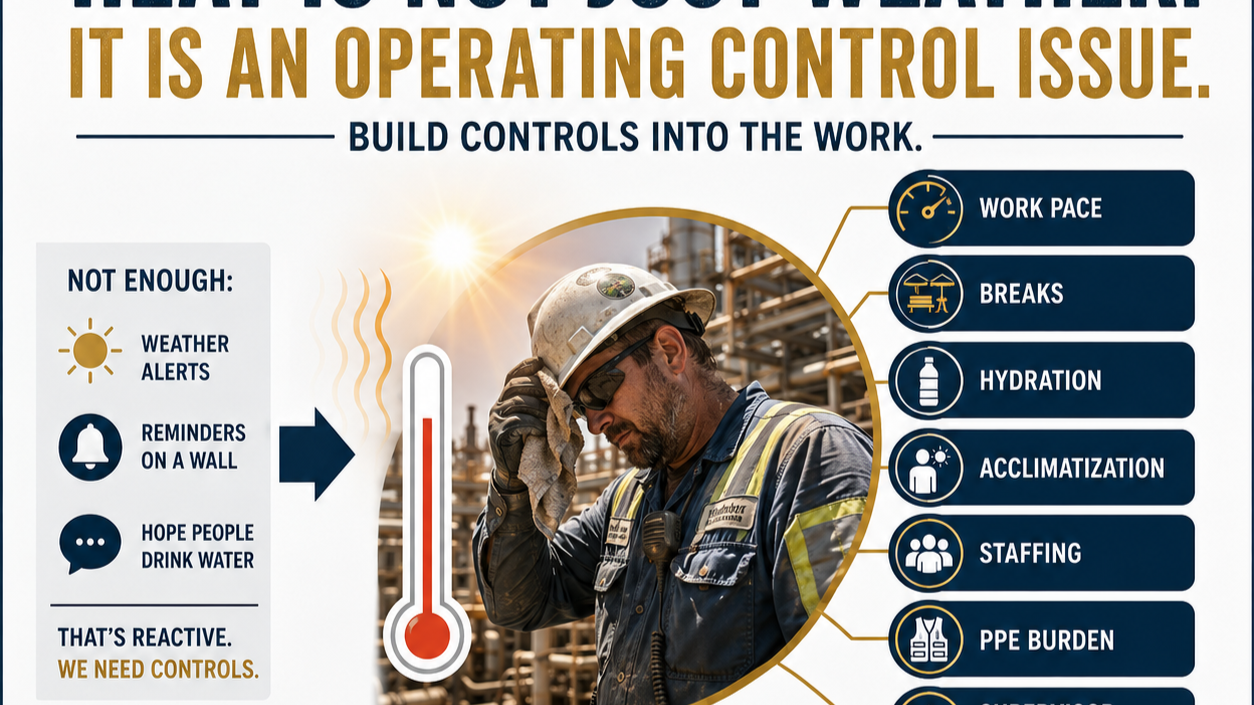
Your Heat Program Is Not a Water Cooler
A water station and reminder poster are not a complete heat program. Effective prevention depends on how work is planned, paced, staffed, and supervised.
Read More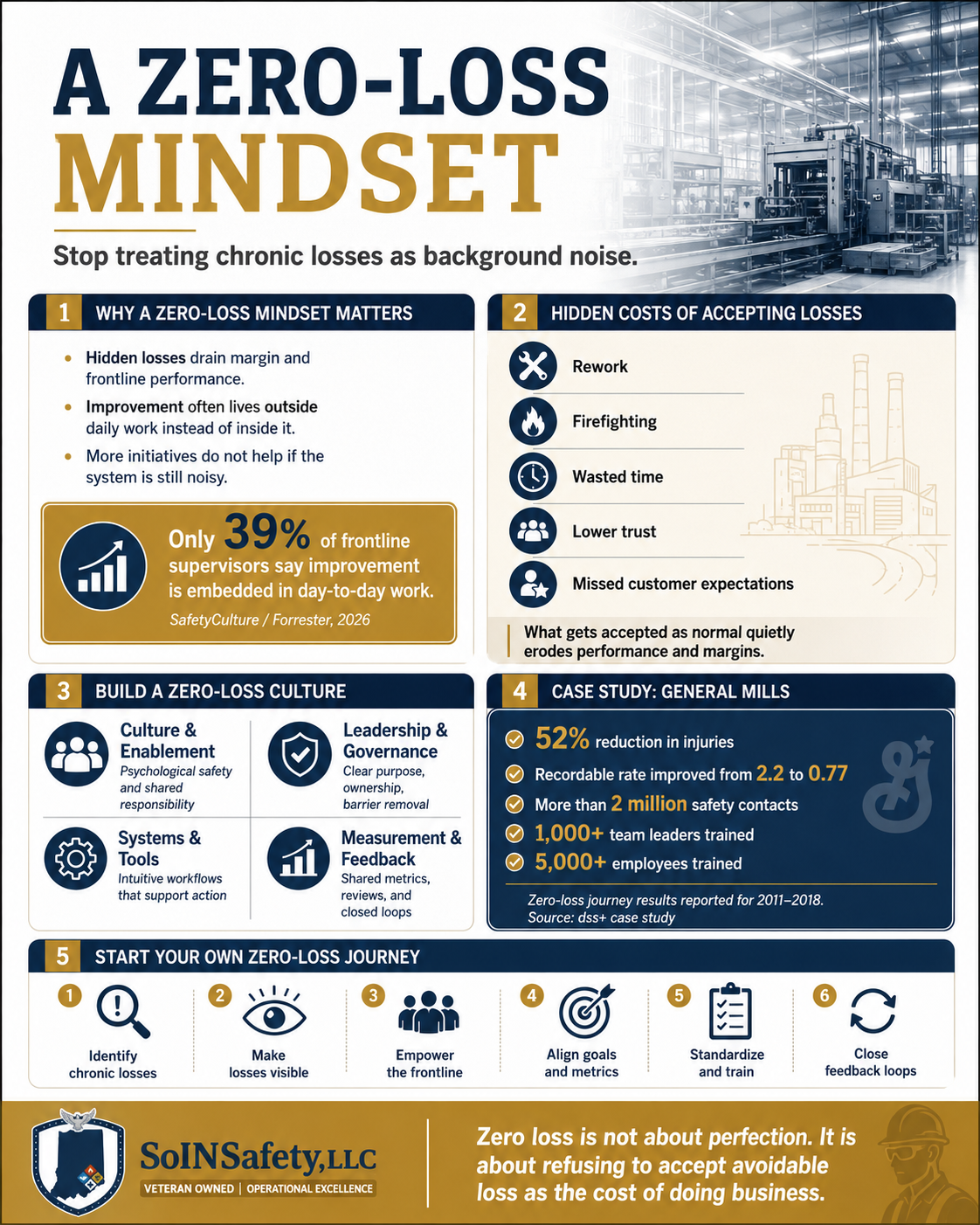
Zero Losses: Building a Culture Where Chronic Problems Aren’t Normal
Chronic equipment problems and recurring incidents become normalized when teams treat them as operating noise. A zero-loss mindset makes those losses visible, owned, and systematically reduced.
Read More
Stop Using Training to Fix What Design Broke.
Retraining can feel responsible, but it cannot repair poor job design. When problems repeat, leaders should examine the system before blaming knowledge or behavior.
Read MoreCalm Is Not Complacency. It Is Control.
Repeated heroics are often evidence of an unstable system. Real operational control is quieter: clear standards, sound handoffs, visible risk, and problems addressed before they become crises.
Read MoreNo Action Is Complete Without Proof.
Corrective actions are not complete when someone says the issue was handled. Closure requires evidence that the change was made, verified, and sustained.
Read More
Not Everyone Is Building an Empire
Extreme founder schedules are not a universal standard. Strong organizations can expect high performance without treating burnout as proof of commitment.
Stay Focused on the Outcome, But Stay Close to the Process
Results matter, but leaders lose control when they drift from the process that produces them. Process discipline keeps shortcuts from becoming the operating standard.
Your Heat Program Is Not a Water Cooler
A water station and reminder poster are not a complete heat program. Effective prevention depends on how work is planned, paced, staffed, and supervised.
Zero Losses: Building a Culture Where Chronic Problems Aren’t Normal
Chronic equipment problems and recurring incidents become normalized when teams treat them as operating noise. A zero-loss mindset makes those losses visible, owned, and systematically reduced.
Stop Using Training to Fix What Design Broke.
Retraining can feel responsible, but it cannot repair poor job design. When problems repeat, leaders should examine the system before blaming knowledge or behavior.
Calm Is Not Complacency. It Is Control.
Repeated heroics are often evidence of an unstable system. Real operational control is quieter: clear standards, sound handoffs, visible risk, and problems addressed before they become crises.
No Action Is Complete Without Proof.
Corrective actions are not complete when someone says the issue was handled. Closure requires evidence that the change was made, verified, and sustained.